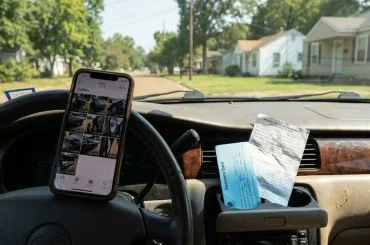

A recent study by the AAA Foundation for Traffic Safety found that in 2023, in the United States, 1 out of every 7 police reported accidents involved a driver who fled the scene without stopping, the highest rate ever recorded. The situation in California is even more concerning: between 2017 and 2023, 10.5% of the state’s fatal accidents were hit and run cases. These numbers alone show just how common hit and run accidents have become in our lives.
Only someone who has gone through this kind of accident truly understands how terrifying it is. On one side there is physical injury, and on the other there is mental stress. One question keeps eating away at the mind: will the person who caused this injury and drove away ever be caught? And if they are not caught, who will pay for this injury?
In today’s article, we will try to understand:
- What counts as a hit and run under California law
- What you should do immediately after the accident
- The step by step process of filing a police report
- What to do if the driver cannot be found
- Why it is important to consult a lawyer
If you or someone you know has been a victim of a hit and run accident in California, we hope today’s article will be extremely helpful for you.
What Is a Hit and Run Under California Law
According to the California Vehicle Code, a hit and run refers to a driver who causes an accident while operating a vehicle and then flees the scene without fulfilling their legal duties. Under California law, even if you are not at fault for the accident, if you are involved in an accident with another vehicle, you are still required to stop at the scene and exchange information. This law is mainly divided into two categories: misdemeanor and felony. The details are given below.
Misdemeanor Hit and Run (VC 20002)
When an accident causes damage only to someone else’s vehicle, house, pet, or other property, but no one is injured, California Vehicle Code 20002 (VC 20002) applies. In this case, the driver must stop the vehicle and park it in a safe location. They must provide the owner of the damaged property with their name, current address, and vehicle registration number. If the vehicle does not belong to them, they must provide the name and address of the actual owner. They must also show their driving license and auto insurance documents.
If the owner cannot be found, the driver must write their name, address, vehicle number, and a description of the incident on a piece of paper and firmly attach it to the windshield or another visible spot on the damaged vehicle. After that, they must report the matter to the nearest police station or the California Highway Patrol (CHP) as quickly as possible.
This is a misdemeanor offense. If convicted, the penalty can include up to 6 months in county jail, a fine of up to 1,000 dollars, or both. In addition, the California DMV will add 2 points to the driver’s record, which significantly increases auto insurance costs.
Felony Hit and Run (VC 20001)
When an accident results in a person being injured or killed, California Vehicle Code 20001 applies. This law applies even if the injury is nothing more than a minor scratch or ache.
Legal duties of the driver:
- The vehicle must be stopped immediately, and the injured person must be given all reasonable assistance, such as calling 911 or arranging for an ambulance if needed.
- The driver must provide their name, address, license, and insurance information to a police officer at the scene or to the injured person.
- If a person dies and no police officer is present at the scene, the driver must report the incident to the nearest police station immediately.
Penalty: Depending on the severity of the injury, this is called a “wobbler,” meaning the prosecutor can choose to charge it as either a misdemeanor or a felony.
For ordinary injuries: up to 1 year in county jail or a fine of 1,000 to 10,000 dollars.
For serious injury or death: this is definitely treated as a felony or serious crime. The penalty can include 2 to 4 years in California state prison and a fine of 1,000 to 10,000 dollars.
Important Aspects of California’s Hit and Run Law
- Accidents in parking lots: If you hit a parked, empty vehicle and drive away, this is also considered a hit and run under VC 20002. Leaving without a note is a crime.
- Fault does not matter: The law does not consider who was at fault in the accident. Even if you are completely innocent, if you fail to stop after the accident, you can still be charged with hit and run.
- Defense: Common defenses against this charge in California courts include the driver genuinely not knowing that an accident occurred or that property was damaged, the driver being too seriously injured to provide information, or the vehicle having been stolen and driven by someone else.
What to Do Immediately After the Accident
If the offending driver flees the scene after a hit and run accident in California, your first and most important task is to ensure your own safety and immediately gather evidence. Under California law, you must stop at the scene even if the other driver has fled. The steps you should take immediately after the accident are detailed below.
1. Move to a Safe Location and Stay Calm
If you are on an active road, move your vehicle to the side of the road or a safe pull off area to avoid oncoming traffic. Never chase after the fleeing driver in your own vehicle to try to catch them. Doing so can cause a much bigger accident and can also weaken your legal position.
2. Call Emergency Services
Immediately call an emergency number such as 911 to notify the police and the California Highway Patrol (CHP). If anyone is injured, request paramedics or an ambulance. The police will arrive, record the details of the incident, and create an official report. This police report is extremely important for filing an insurance claim.
3. Try to Remember Details of the Fleeing Vehicle
In the moments before the vehicle disappears from view, write down or voice record as much of the following information as possible:
- License plate: the full number if possible, or at least a partial number or 3 to 4 letters and digits.
- Vehicle description: make, model, color, and any distinguishing marks such as stickers, scratches, or damaged parts.
- Driver description: whether the driver was male or female, approximate age, hair color, or skin tone.
- Direction of escape: which direction or road the vehicle fled toward.
4. Gather Evidence at the Scene
Take clear photos and videos of the damage to your vehicle, the condition of the road, any skid marks on the road, and any injuries on your body. Look around for nearby shops, homes, traffic signals, or doorbell cameras (such as Ring) that may have captured video of the incident.
5. Talk to Witnesses
If any pedestrians or other drivers saw the accident, collect their names and phone numbers before the police arrive. Insurance companies sometimes assume that you caused the damage yourself, so witness statements can help prove the truth of what happened.
6. See a Doctor
Even if there is no obvious major injury, see a doctor as soon as possible. The adrenaline released during an accident can mask internal injuries or a concussion that may not be immediately noticeable.
7. Notify Your Insurance Company and the DMV
Notify your own auto insurance company about the hit and run on the same day as the accident. If your policy includes Uninsured Motorist Coverage (UM), it may be used to cover your damages. Under California law, if the accident results in injury or more than 1,000 dollars in property damage, you must submit an SR-1 form to the California DMV within 10 days.
Step by Step Process for Filing a Police Report
Below is a complete, detailed guide to properly filing a police report and completing the legal process after a hit and run accident in California.
Step 1: Immediate Call From the Scene
As soon as the vehicle flees, stand in a safe location and call the emergency number. Clearly state which area, highway (such as I-5 North), or intersection you are at. Tell the operator exactly which direction the vehicle went (for example, “Eastbound on Sunset Blvd”) so that nearby patrolling police can try to stop the vehicle.
Step 2: On-Scene Interview With the Officer
Once the officer arrives at the scene, describe the timeline of events. Do not speak based on assumptions, only describe what you actually saw. Even if you have minor pain or discomfort, inform the officer. This will be documented in the report as “Injuries Sustained,” which can later help with medical bill claims. If you have dashcam footage, show it to the officer and make sure they know how to obtain a copy of the video.
Step 3: Collect the Traffic Incident Card
Before the officer leaves the scene, they will give you a small card or receipt. Make sure this card includes the following information:
- Report number / incident number
- The investigating officer’s name and badge number
- The name of the relevant police agency (such as LAPD, SFPD, or CHP)
Step 4: Off-Scene or Delayed Reporting (If Police Do Not Come to the Scene)
In many cases, if the damage is minor or the accident happened in a parking lot, the police may not come to the scene. In that case, you will need to choose one of the following two options:
- Online police report: Visit the official website of the relevant city’s police department (such as the Los Angeles Police Department Online Reporting). Select the “Hit and Run / Traffic Accident” option and fill out the form.
- Walk-in report: Visit the nearest police station and fill out a “Counter Report” form. Bring your vehicle registration, driving license, and photos of the damage with you.
Step 5: Obtain the Official Copy of the Final Police Report
A complete and legally valid traffic accident report (Form CHP 555 or its equivalent) usually takes about 5 to 10 business days to prepare, and in some cases 2 to 3 weeks.
Ways to obtain a copy:
- Visit the Records Division of the police station and show your report number to get a copy.
- Many police departments provide digital copies through online portals such as LexisNexis or CrashDocs for a small fee, usually between 10 and 25 dollars.
Step 6: Official Notice to the California DMV (SR-1 Form)
After filing the police report, this is another extremely important legal step in California. If the accident results in injury or the total damage exceeds 1,000 dollars, you must report it. This must be reported within exactly 10 days of the accident. Go to the California DMV’s official website and fill out the SR-1 (Report of Traffic Accident Occurring in California) online form. You will need to enter your police report number and insurance policy number here.
What to Do If the Driver Cannot Be Found
If the offending driver cannot be found after a hit and run accident in California, your main goal should be to ensure your own physical recovery and to seek compensation through your own insurance and the legal process. If the fleeing driver remains unidentified, the steps you should take under California law and insurance regulations are detailed below.
1. Review Your Own Auto Insurance Policy
If the offending driver cannot be caught, the cost of repairing your vehicle and covering your medical treatment can potentially be covered through the following policies:
- Uninsured Motorist Bodily Injury (UMBI): Under California insurance law, if the offending driver in a hit and run is unidentified, they are treated as an “uninsured” driver. If your policy includes UMBI, it will cover medical bills for you and your vehicle’s passengers.
- Collision Coverage: You can use your collision coverage to repair the damage to your vehicle. However, you may need to pay your policy’s deductible in this case.
- Uninsured Motorist Property Damage (UMPD): It is generally difficult to cover hit and run vehicle damage through UMPD, because under California law, receiving UMPD benefits requires identifying the fleeing vehicle’s license plate number or the driver.
2. File Your Insurance Claim Within the Correct Time Limit
Most insurance companies have a specific deadline for hit and run claims, usually between 30 and 60 days after the accident, though this can vary by policy. If you do not file a claim within this period, they may refuse to pay compensation.
The insurance company must be shown proof that this was a genuine hit and run (that you did not cause the damage yourself). Therefore, submit a copy of your filed police report or the incident number to the insurance company.
3. Seek Help From Government Victim Compensation Funds
If you or a family member is seriously injured in the accident and you do not have health insurance or auto insurance, you can apply to the California Victims of Crime Program (CalVCP). This government program helps cover medical costs and mental trauma counseling fees for victims of various crimes, including hit and run accidents.
Why It Is Important to Consult a Lawyer
If the driver flees after a hit and run accident in California, consulting a personal injury lawyer is extremely important to protect your rights and secure fair compensation. First, insurance companies often try to reduce claim payouts or deny them entirely to protect their own business interests. A lawyer negotiates professionally on your behalf and protects you from these unfair offers. Second, under California law, even when Uninsured Motorist (UM) coverage applies to an unidentified driver, you must prove “physical contact” between the two vehicles, which a lawyer can accurately establish through dashcam footage or scratch analysis.
Third, many internal injuries are not immediately apparent after an accident. A lawyer calculates the accurate financial value of your current and future medical costs, lost wages due to trauma, and mental suffering, and presents the maximum possible claim. Fourth, due to workload, police often do not conduct a deep investigation, but a lawyer’s own investigative team can review nearby CCTV footage or doorbell camera footage to try to identify the offending driver. The final advantage is that most lawyers in California work on a contingency fee basis, meaning a “no win, no fee” arrangement, so if the case is not won and compensation is not recovered, you do not have to pay any fee, eliminating the risk of losing money out of pocket.
For more detailed information on this topic, and for detailed information on California’s hit and run, car accident, and pedestrian related laws, you can check out the articles on InjuryRights101.
Final Thoughts
A single moment of impact can change a life, but what you do afterward determines how protected you will remain. Whether the fleeing driver is caught or not, filing a police report on time, gathering evidence, and following mandatory steps such as the DMV’s SR-1 form form the strongest foundation for receiving compensation. You do not have to fight alone through this pile of paperwork and deadlines, most lawyers offer a free initial consultation. The faster you act, the fresher the evidence stays, and the stronger your case becomes.